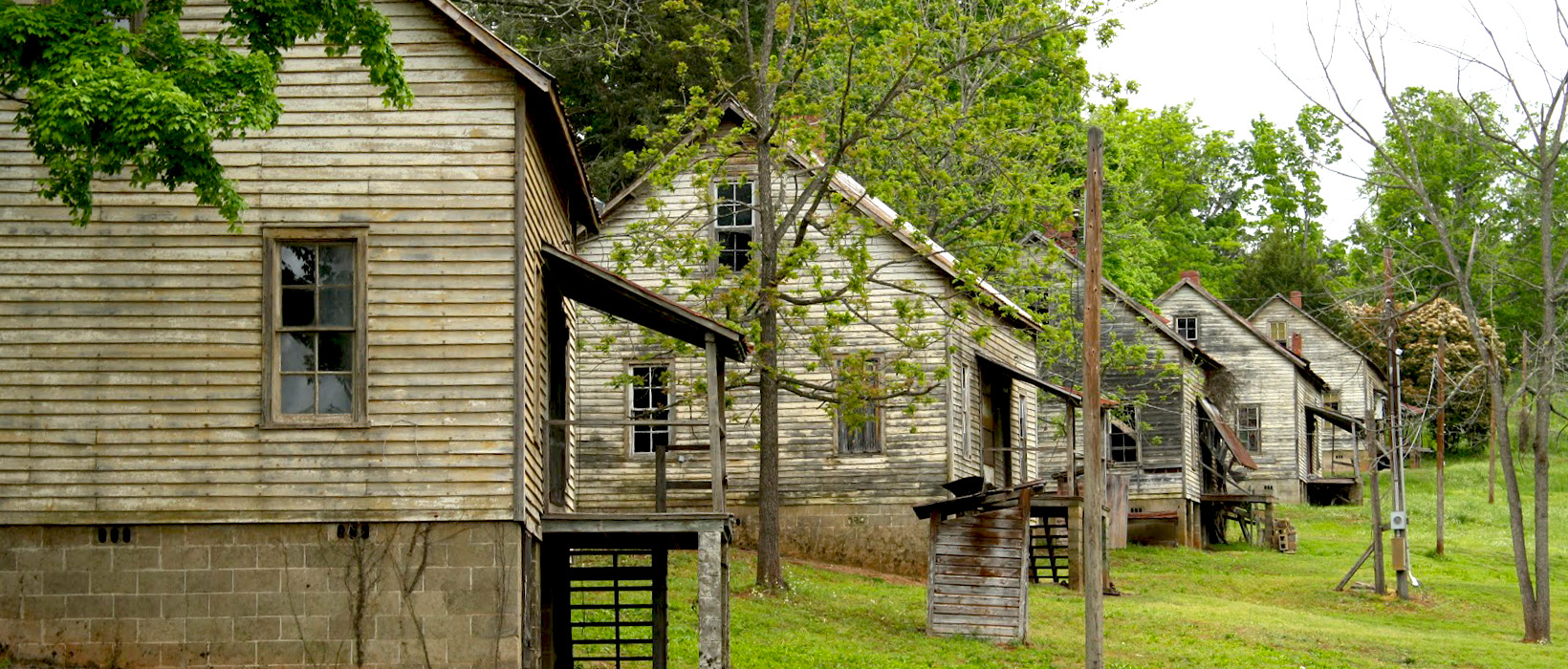
On Location – Henry River
Nestled in the foothills of North Carolina, the abandoned mill village of Henry River offers a hauntingly beautiful backdrop for an on-location photoshoot. Known for its rustic charm and cinematic history — most notably as District 12 in The Hunger Games — the site is rich with weathered wooden structures, overgrown paths, and the quiet echo of a bygone era. During the golden hour, soft light filters through the trees, casting dramatic shadows across crumbling porches and rusted tin roofs, creating an atmosphere that’s both nostalgic and surreal. Ideal for fashion editorials, conceptual portraits, or cinematic storytelling, a shoot in Henry River evokes a sense of raw authenticity and Southern gothic allure that can’t be replicated in studio settings.


History
Henry River, North Carolina, is a former mill village established in the early 1900s around a textile mill that once thrived along the banks of the Henry River. The community was built to support the operations of the Henry River Manufacturing Company, which primarily produced fine cotton yarn. At its peak, the village included a company store, a few dozen worker homes, and a small schoolhouse, creating a self-sufficient, tight-knit community. The mill operated until the 1960s, after which the village slowly fell into disrepair and was eventually abandoned. Despite its decline, Henry River found new life in pop culture when it was used as the filming location for District 12 in The Hunger Games, drawing visitors and history buffs alike. Today, the ghost town stands as a poignant reminder of North Carolina’s industrial past and the transient nature of company towns.


Whispers of the River: A Henry River Photo Journey
The morning I left for Henry River, the fog was already heavy. It clung to the curves of the highway like an omen, or a curtain waiting to rise. I’d read about the place—abandoned mill town, bones of buildings standing still in time, whispers of lives once lived. But I hadn’t expected the silence to follow me the way it did.
When I arrived, the air felt like it had weight. The quiet wasn’t just an absence of sound—it was presence. Thick, watching. Even the wind seemed to tread carefully between the old wooden structures, as if afraid to disturb something sacred.
The first thing I photographed was the general store. Weather-beaten and hollowed by time, it stood like a sentinel at the entrance of the past. Its windows, empty-eyed and glassless, caught the morning light in jagged shards. I stepped carefully, my camera shutter the only interruption in a place that didn’t seem to know what century it was anymore.
As I wandered deeper, the beauty became more jarring. Trees had reclaimed much of the land—roots curling over fallen steps, vines threading through fractured walls. One house, its roof caved in, had a rusted tricycle out front. A tableau no one had touched. It wasn’t a ruin—it was a memory.
Every frame I captured felt like a secret. The contrast of decay and life—sunlight slanting through broken floorboards, wildflowers blooming defiantly through concrete—was hauntingly beautiful. Even the river moved slowly to a trickle, its surface a perfect mirror for the sagging silhouettes of the ghost town.
At times, I felt like I wasn’t alone. Not in a supernatural way, but as if the town itself was aware of being seen. My lens became less a tool and more a translator, trying to speak the language of what was left behind.
I stayed until the light began to leave. The golden hour in Henry River was unreal—soft, amber hues catching on flaking paint and moss-covered brick. The shadows grew long and stretched like memories down the dirt paths between buildings. It was both an ending and a preservation.
On the drive back, I didn’t listen to music. The silence had left a mark on me, like a fingerprint pressed into the dust of my thoughts. I wasn’t just taking photos—I had witnessed something. A stillness that felt alive. A beauty carved from abandonment.
Henry River didn’t speak in words. But I heard it.


